
TK2d Is Commonly Misdiagnosed2,6
TK2d Is Commonly Misdiagnosed2,6
TK2d shares symptoms with a number of other diseases.1,3,4
View differential diagnosis
Recognising TK2d
Thymidine kinase 2 deficiency (TK2d) is a rare, inherited, debilitating, and often fatal myopathic mitochondrial disease, which leads to impaired energy production in cells.1,2 TK2d is classified as mitochondrial DNA depletion/deletion syndrome, a category of mitochondrial disease.3
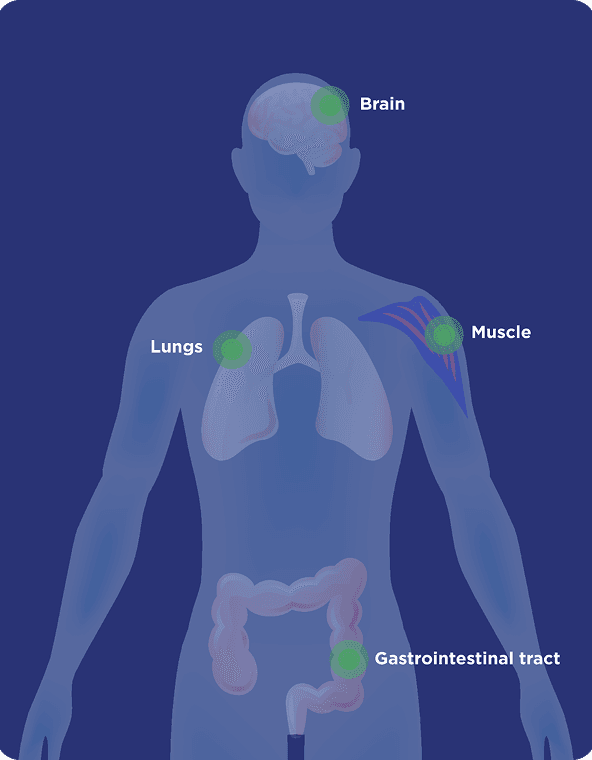
This proximal muscle weakness affects different parts of the body. Patients may lose the ability to walk, eat, and breathe independently.1,4,5
Organ system and related symptoms:1,3-5
Muscles: Delay, regression, and/or loss of motor milestones, proximal weakness, hypotonia, Gowers' sign, facial diplegia, ptosis1,3-5
Respiratory system: Respiratory insufficiency and/or failure due to respiratory muscle weakness1,3-5
Gastrointestinal tract: Dysphagia, failure to thrive
Brain: Some patients may experience central nervous system abnormalities, such as seizures, encephalopathy, and cognitive dysfunction and decline
TK2d has an estimated prevalence of 1.64 cases per million people worldwide.6
When age of symptom onset is 1 year or younger, survival is less than 1 year.4,5
TK2d is a deficiency of the thymidine kinase 2 enzyme, which is crucial for the maintenance and synthesis of mitochondrial DNA.5,7 TK2d is a result of a defect in a nuclear gene (in this case, the TK2 gene), whereas many other mitochondrial diseases are caused by defects in mitochondrial genes.7,8
Early onset of TK2d is related to more severe symptoms with a faster disease progression. Early onset is defined as TK2d symptom onset that occurs before the age of 12 years.5 Late onset of TK2d may be possible and is defined as symptom onset after 12 years.4,5
Because long diagnostic journeys and misdiagnoses are common for patients with mitochondrial diseases, people with TK2d may be diagnosed years after symptom onset. Even those diagnosed as adults may have early-onset TK2d if their symptoms began at or before 12 years of age.3,7,9
Onset from 0-12 years
Infants often have a healthy birth and reach early developmental milestones.
Shortly after, they may experience rapid decline characterized by loss of motor milestones and acute respiratory insufficiency.
Infants with symptom onset before age 1 have a median postonset survival of approximately 1 year. Patients with disease onset between ages 1 and 12 years have a median postonset survival to at least 13 years, but this number decreases when onset happens at an earlier age.
Manifestations include facial weakness, droopy eyelids, difficulty eating, trouble breathing, and proximal muscle weakness.1,4
Symptoms chart
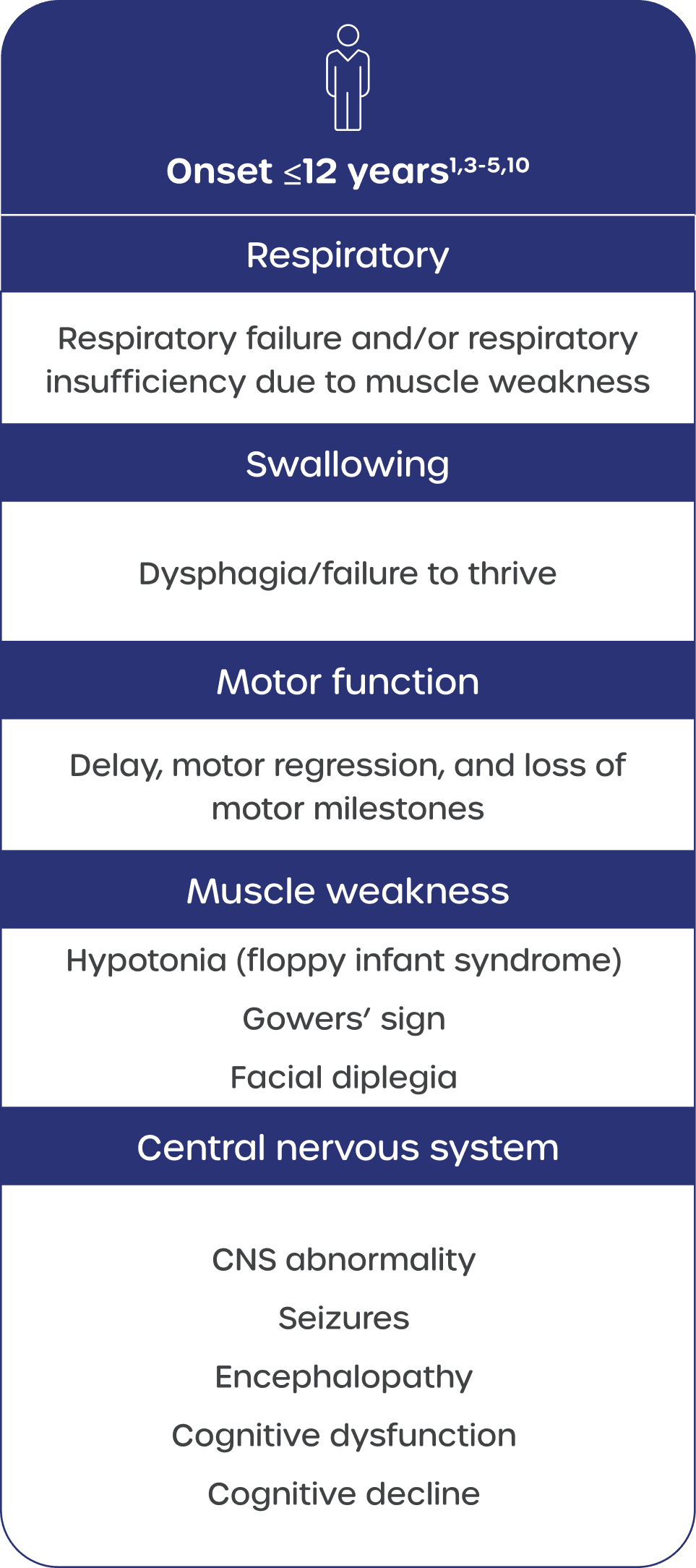
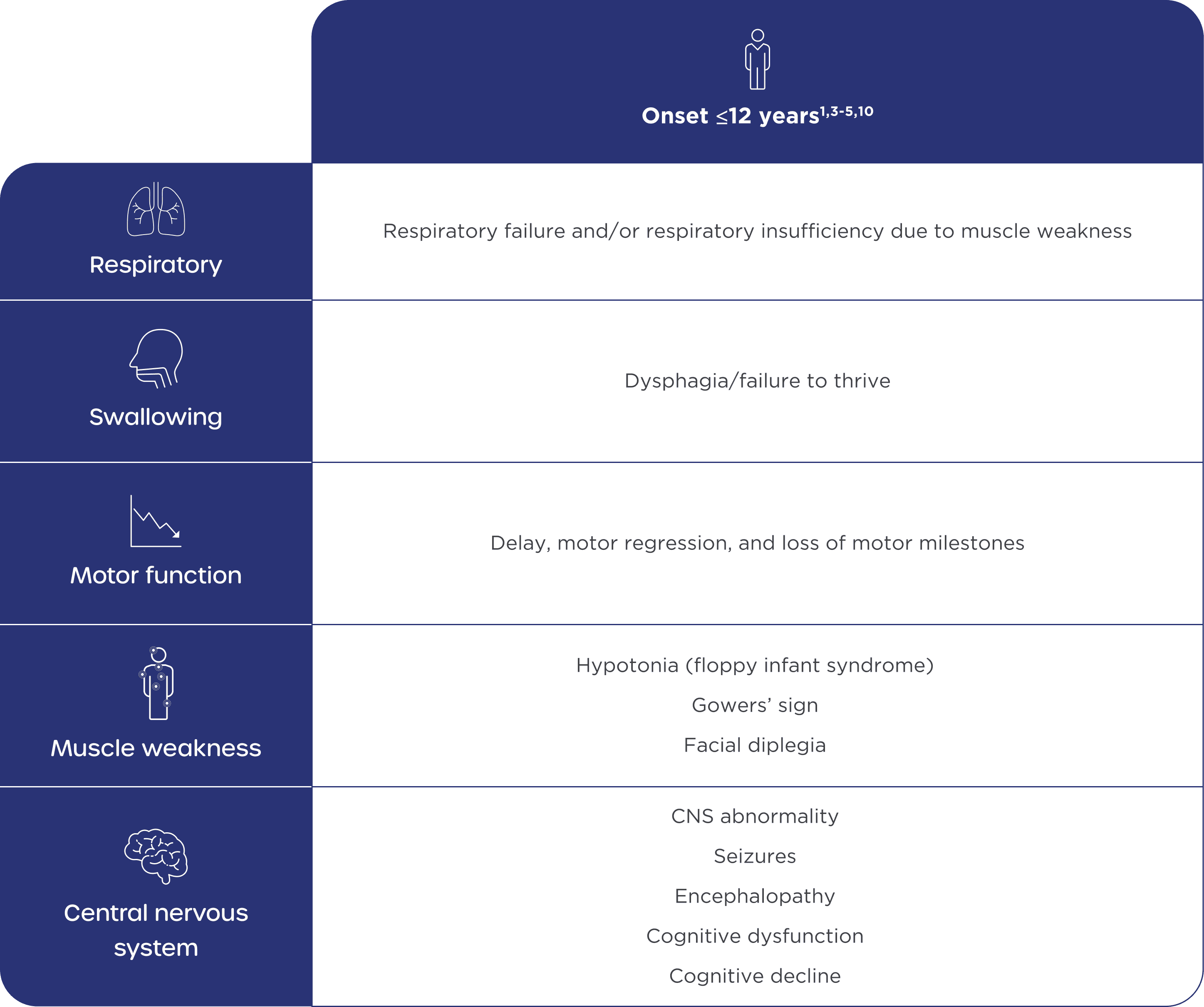
TK2d comprises a clinical continuum of symptoms ranging from slow, debilitating symptoms to rapidly progressive/life-threatening symptoms.4,5
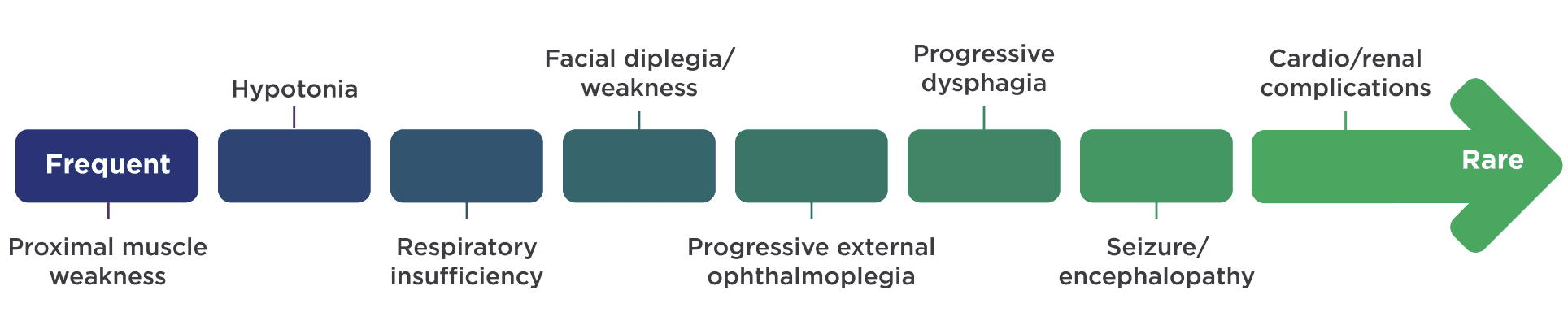

* These subtypes are a general guide to clinical manifestations; however, each person living with TK2d may present differently. The age thresholds reported are reflective of the scientific opinion of UCB and may differ from those in single publications available in the literature.
Connie, lives with TK2d

That means some patients may need further genetic testing.11
The TK2 gene is found in the nuclear genome, not the mitochondrial genome.2,3,12
Because not all tests include the nuclear genome, many do not look for TK2d. Whole-exome sequencing, whole-genome sequencing, and broad genetic panels for nuclear mitochondrial genes usually include TK2.4
Order these genetic tests to definitively diagnose TK2d.1,4
TK2d Is Commonly Misdiagnosed2,6
TK2d shares symptoms with a number of other diseases.1,3,4
View differential diagnosis
Sign Up for More Information
Receive information from UCB about developments in TK2d and other mitochondrial diseases.
Stay connected