Mitochondrial Diseases

Mitochondrial diseases have progressive and severe impacts on quality of life1-4

There are many types of diseases affecting mitochondria, each characterized by progressively worsening symptoms and involving multiple organs or organ systems.5 They are often fatal. While rare, mitochondrial disease may actually be more common than some may think.1,6 


How TK2d impacts the body

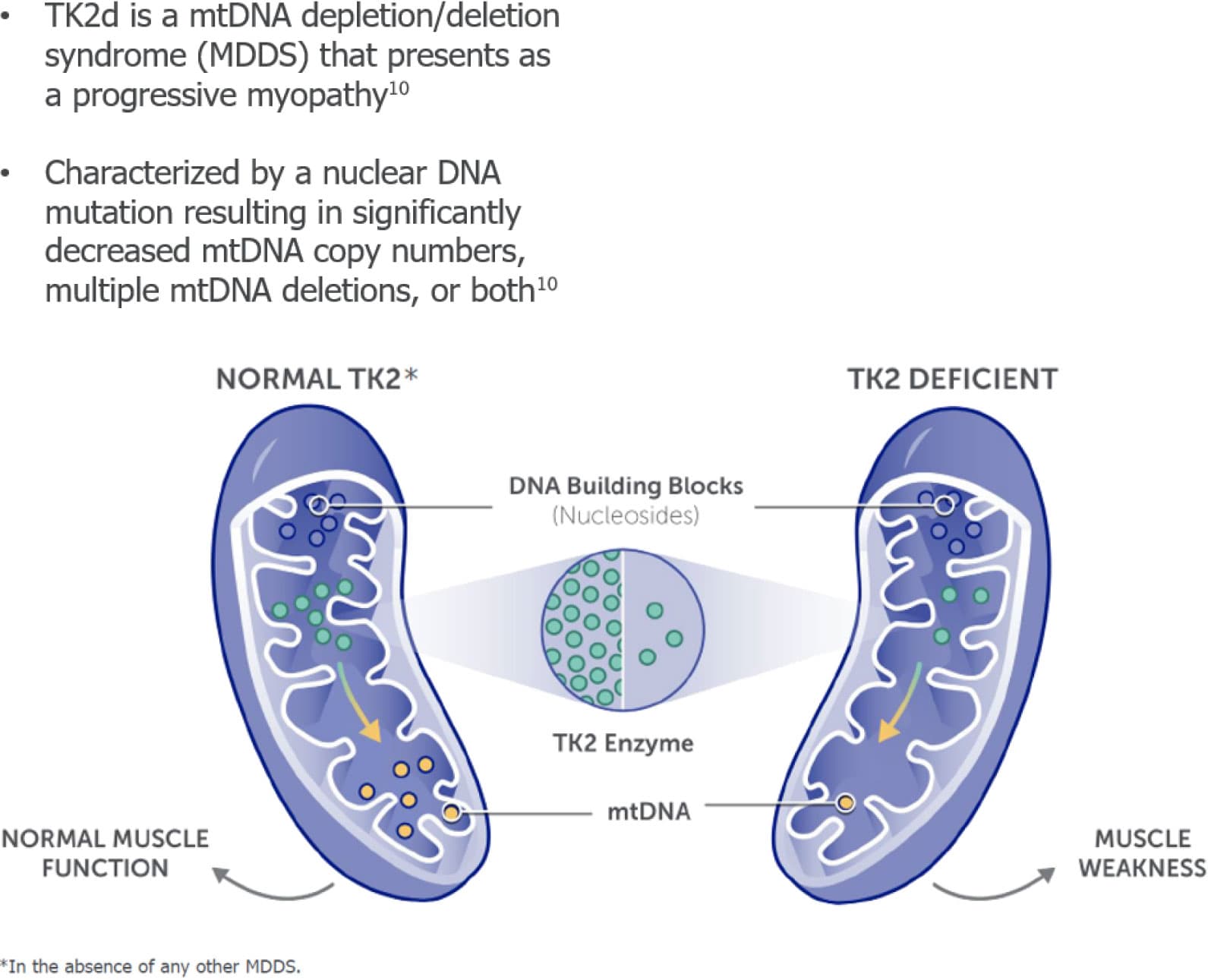
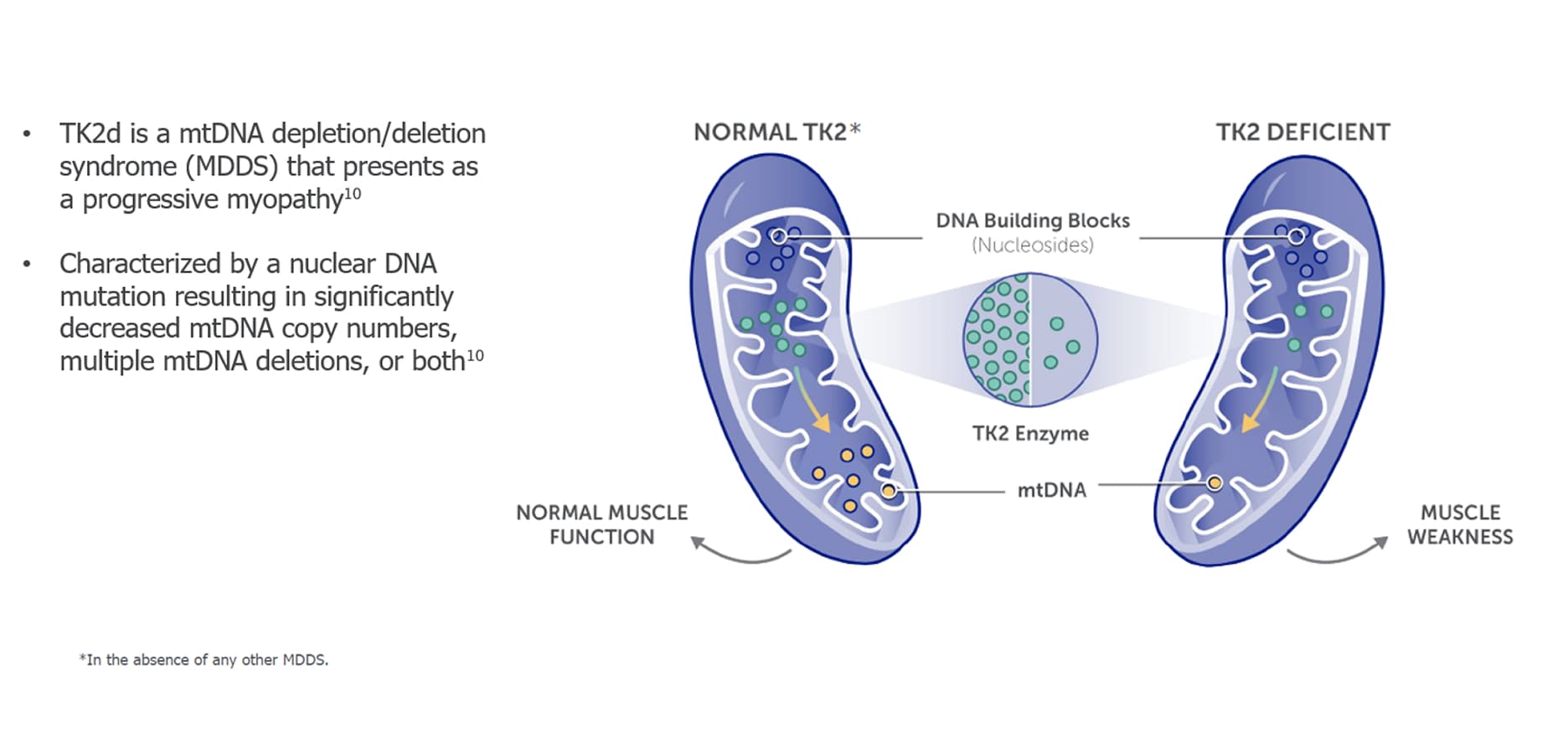
In normally functioning cells, the TK2 enzyme aids in the phosphorylation of deoxythymidine and deoxycytidine, which is a critical step in the production of mitochondrial DNA (mtDNA). mtDNA is needed by mitochondria to produce energy for the cells and the body.7-9  

TK2d is the result of a mutated thymidine kinase 2 (TK2) gene, which encodes for the TK2 enzyme. The genetic mutation disrupts mtDNA synthesis, which results in an energy deficit that causes progressive muscle weakness/muscular degeneration and multisystem involvement.7,9

TK2d physiopathology

When to consider genetic testing

The complex presentation is a barrier to diagnosis, often resulting in misdiagnosis or delayed diagnosis.5 However, advancements in genetic testing have made diagnosing mitochondrial diseases such as TK2d easier. If you see red-flag symptoms of mitochondrial diseases, consider conducting a genetic test to help shorten the diagnostic journey.11,12

Reduced fatigue icon

Reduced energy/fatigue

Muscle weakness icon

Muscle weakness

Difficulty swallowing or walking icon

Difficulty swallowing or walking

Neurological symptoms icon

Neurological symptoms (eg, epilepsy, ataxia, hearing loss)

Infants icon

In infants: hypotonia, weakness, failure to thrive, and metabolic acidosis (especially lactic acidosis)


Find out more

TK2d is a rare, inherited, and often fatal disease8,13

TK2d is classified as mitochondrial DNA depletion/deletion syndrome, a category of mitochondrial disease.13

Learn more about TK2d

Sign Up for More Information

Receive information from UCB about developments in TK2d and other mitochondrial diseases.

Stay connected